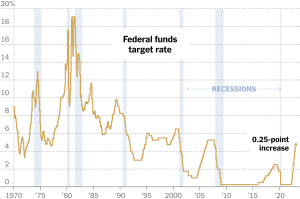



The U.S. Federal Reserve has once again opted to maintain its benchmark interest rate at 4.25–4.5 percent, a move analysts say narrows the policy space for the Indonesian Central Bank (BI) to cut interest rates amid an ongoing slowdown in domestic economy.
The decision was announced late on Wednesday in Washington, D.C. (Thursday morning Jakarta time) following the two-day meeting of the Federal Open Market Committee (FOMC) on May 6–7.
It marks the third consecutive FOMC meeting this year in which the Fed refrained from easing rates, citing persistent inflation risks and rising unemployment pressures linked to President Donald Trump’s latest trade tariff policies.
According to Reuters, Fed Chairman Jerome Powell said the U.S. central bank is opting for a cautious, wait-and-see approach given growing global uncertainties.
"Although uncertainty has increased, the economy remains in a solid position. We believe our current stance of monetary policy puts us in a good place to respond appropriately to future economic developments," Powell said at a press conference.
Implications
Back home, economists warned that the Fed’s stance complicates BI’s efforts to support growth while maintaining currency stability.
Senior economist and lecturer at the Faculty of Economics and Business, University of Indonesia (FEB UI), Fithra Faisal Hastiadi, noted that elevated U.S. rates, a weakening Chinese yuan, and geopolitical tensions are fueling capital outflow risks and downward pressure on the rupiah.
“For Indonesia, the Fed’s decision effectively limits monetary policy flexibility. BI is now caught between the need to stabilize the rupiah and the need to stimulate a slowing economy,” Fithra said as quoted in a statement on Friday, May 9, 2025.
Indonesia’s economy grew by just 4.87 percent year-on-year in the first quarter of 2025, its slowest pace since 2021. This has added urgency for monetary easing, but with external risks mounting, BI is widely expected to hold off on any rate cuts in the near term.
Fithra also highlighted the recent drop in the country’s foreign exchange reserves by US$4.6 billion to US$152.5 billion as of end of April, a decline he attributed to BI’s market interventions and debt repayments.
“This signals BI’s ongoing efforts to manage currency volatility. Looking ahead, we expect the central bank to maintain its intervention strategy as uncertainties persist, from the Fed’s policy trajectory and U.S.-China trade talks to global market volatility,” he said.
With no clear signal of dovishness from the Fed, analysts anticipate that BI will likely keep its benchmark rate steady in the coming months, prioritizing financial stability over aggressive monetary stimulus.
Tag
Already have an account? Sign In
-
Start reading
Freemium
-
Monthly Subscription
20% OFF$29.75
$37.19/MonthCancel anytime
This offer is open to all new subscribers!
Subscribe now -
Yearly Subscription
33% OFF$228.13
$340.5/YearCancel anytime
This offer is open to all new subscribers!
Subscribe now
Set up email notifications for these topics