


The fast-moving consumer goods (FMCG) industry in Indonesia experienced a slowdown in growth in the first quarter (Q1) of 2025.
A latest report by Kantar Worldpanel Indonesia, entitled Brand Footprint 2025, concludes that although the market is still growing, the pace is not as strong as in previous years.
This situation is influenced by a number of external factors, including global and local economic challenges that are still suppressing consumer purchasing power. In addition, the absence of political momentum, such as the election that had increased consumption in the first quarter of last year, also affected the comparison of year-on-year growth.
However, amid these conditions, Kantar's annual report shows that more and more brands have managed to record growth. Some 62 percent of the brands studied experienced an increase in Consumer Reach Points (CRP), a combined metric between the number of purchasing households and the frequency of purchases. This figure has jumped sharply compared to last year,which was only 49 percent.
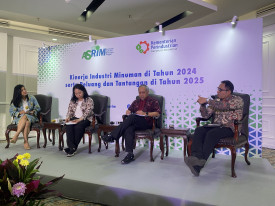
"CRP provides a comprehensive overview of brand strength in the FMCG market. This year, growth is dominated by an increase in the number of new buyers," Venu Madhav, Managing Director of Kantar Worldpanel Indonesia, at the launch of the report, on Thursday, May 8, 2025.
Kantar Worldpanel Indonesia's Brand Footprint report is an important reference for FMCG industry players in reading market dynamics and determining the direction of growth strategies amidst changes in people's shopping behavior.
Kantar data reveals that 89 percent of brands that grow successfully do so through increasing market penetration, namely the addition of households that buy the product. Only a small portion grows because they succeed in increasing the frequency of purchases from existing consumers.
Kantar Senior Marketing Manager, Corina Fajriyani, emphasized that small to medium brands must prioritize a buyer base expansion strategy. "The more buyers reached, the greater the opportunity for brands to grow faster, especially for those with small market penetration," Corina cited.
In this year's report, Kantar also introduced brand classification based on market penetration level, namely Super Brands with penetration of less than 70 percent, Large Brands with penetration between 30-70 percent, Medium Brands between 10 percent-30 percent, and Small Brands less than 10 percent.
This classification provides a strategic framework that makes it easier for brands to determine their growth focus, between adding new buyers or increasing the frequency of existing consumers.
Meanwhile, the top 10 most popular brands this year are still dominated by old names, although there has been a shift in position. To be able to enter this elite list, a brand must be chosen at least 750 million times by Indonesian consumers in one year.
Kantar also announced three local brands as "The Remarkable Newcomer" which managed to enter the top 100 Most Chosen Brands, namely Kanzler snacks, Gentle Gen detergent, and 'Sayang'. Their success is considered to reflect the strength of local brands in responding to market needs and building relevance amidst tight competition.
“Once a brand reaches more than 70 percent of Indonesian households, the focus can shift to increasing purchase frequency. But for most brands, increasing penetration remains the primary strategy for growth,” Venu Madhav concluded.
Tag
Already have an account? Sign In
-
Start reading
Freemium
-
Monthly Subscription
20% OFF$29.75
$37.19/MonthCancel anytime
This offer is open to all new subscribers!
Subscribe now -
Yearly Subscription
33% OFF$228.13
$340.5/YearCancel anytime
This offer is open to all new subscribers!
Subscribe now
Set up email notifications for these topics