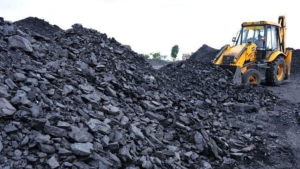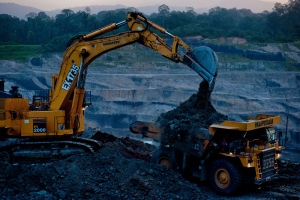


Indonesia’s coal industry asks the government to provide greater clarity and investment guarantees as seven major mining companies face a regulatory mandate to begin downstream processing projects as part of their contract extensions.
The mandate, issued by the Energy and Mineral Resources Ministry (ESDM), requires coal companies whose Coal Contract of Work (PKP2B) agreements are being converted into Special Mining Business Licenses (IUPK) to be committed to downstream investments. These include high-cost coal gasification and derivative product processing projects.
This obligation was revealed by Director General of Minerals and Coal at the ESDM Ministry, Tri Winarno, in a hearing with Energy Commission XII of the House of Representatives on Tuesday, May 6, 2025.
The seven firms are PT Arutmin Indonesia, PT Kaltim Prima Coal (KPC), PT Adaro Andalan Indonesia (AADI), PT Kideco Jaya Agung, PT Multi Harapan Utama (MHU), PT Tanito Harum, and PT Berau Coal.
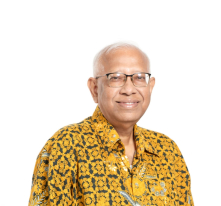
"While the government mandates coal conversion through downstreaming, it is also their duty to ensure this is economically viable," Hendra Sinadia, a representative of coal producers, said as quoted on Wednesday, May 7, 2025.
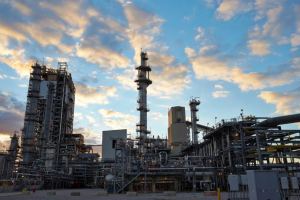
The downstream program, aimed at converting coal into products like dimethyl ether (DME), synthetic natural gas (SNG), and methanol, requires an estimated total investment of US$11.47 billion (Rp189.25 trillion). Industry leaders say this raises serious concerns over return on investment, given the high technology costs and a lack of clarity in market absorption and pricing.
"Technology for coal conversion is extremely expensive. This is not like nickel, where downstreaming is relatively affordable and already supported by global demand,” Hendra added.
Hendra, who also served as Executive Director at the Indonesia Mining Association (IMA), warned that investors are increasingly averse to coal-related ventures due to global decarbonization pressures. Currently, China is seen as the most likely partner country for such projects, given its experience in coal-to-chemical technology.
Pricing uncertainty remains another critical challenge, particularly for DME, a potential LPG substitute. With limited global supply, DME prices remain high, raising doubts over whether gas distributors can afford to absorb the product and turn it into a viable domestic fuel.
“We're talking about investments that stretch 30 years into the future. Without economic feasibility, it’s an impossible risk,” Hendra said.
Meanwhile, state-owned coal miner PT Bukit Asam (PTBA) called on lawmakers to accelerate the issuance of derivative regulations that would enact a 0 percent royalty incentive for downstream coal projects, as outlined in Government Regulation in Lieu of Law (Perpu) No. 2/2022 on Job Creation.
“Concrete fiscal incentives are crucial to encourage full participation in the downstream ecosystem,” PTBA president director Arsal Ismail told lawmakers.
PTBA is currently developing several strategic downstream projects, including DME, SNG, synthetic graphite for lithium-ion batteries, and research into humic acid from low-calorific coal for fertilizer production.
The DME project alone will require an estimated US$1 billion in investment, while the SNG facility is projected to cost US$3.2 billion.
Other downstream commitments include:
- PT Arutmin Indonesia: Methanol and ammonia production US$2.7 billion
- PT Kaltim Prima Coal: Methanol facility US$2.17 billion
- PT Kideco Jaya Agung: Gas power plant and ammonia-urea production
- PT Multi Harapan Utama: Semi-coke facility US$81.3 million
- PT Tanito Harum: Semi-coke facility US$42.23 million
- PT Berau Coal: Methanol facility US$774.8 million
Tag
Already have an account? Sign In
-
Start reading
Freemium
-
Monthly Subscription
20% OFF$29.75
$37.19/MonthCancel anytime
This offer is open to all new subscribers!
Subscribe now -
Yearly Subscription
33% OFF$228.13
$340.5/YearCancel anytime
This offer is open to all new subscribers!
Subscribe now
Set up email notifications for these topics