


The government's decision to hand over management of seized oil palm plantations to PT Agrinas Palma Indonesia has triggered serious concerns among civil society groups and land rights activists.
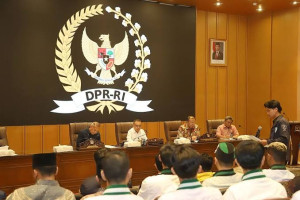
In a recent public forum involving general public, NGO activists and journalists, participants voiced alarm over the lack of transparency, legal clarity, and respect for the rights of indigenous peoples and small farmers.
Agrinas, a State-owned enterprise involved in oil palm plantations and construction consulting, which is described as a "newcomer" in plantation businesses, was granted by the government the right to manage land previously confiscated by the State over legal problems. One such case is the Register 40 plantation in Padang Lawas, North Sumatra, which was ruled by the Supreme Court to be returned to its forest status and not handed to private management.
“How can confiscated land − evidence in a legal case − be handed over to a third party? The land is supposed to remain untouched until there is legal certainty,” Achmad Surambo, Executive Director of Sawit Watch, said on Tuesday, April 29, 2025.
Critics also raised concerns about the lack of clear plan for forest restoration under Agrinas’s management.
“If the goal is truly rehabilitation, then the land should be reforested, not maintained as oil palm plantations,” Surambo said.
Questions were also raised regarding why Agrinas, a relatively unknown player, was chosen over established state-owned enterprises.
“We have state-owned plantation companies like PTPN. Why not let them manage it? Why Agrinas?” Head of the Advocacy Division at the Oil Palm Farmers Union, Marselinus Andri, said.
The forum also highlighted ongoing violations of the principle of Free, Prior, and Informed Consent (FPIC), particularly regarding lands claimed by indigenous communities. Participants stressed that many such territories lack formal recognition and are being taken over without due consultation or agreement with local residents.
“What’s happening now is land grabbing on all sides. First, corporations seized indigenous land, now the State seizes corporate land and hands it to a new entity − without addressing the root problems,” Andri said.
The discussion underscored systemic issues in law enforcement within the palm oil sector. Participants called for full transparency in the process of asset seizure and redistribution. They urged the government to prioritize legal certainty and ecological restoration over commercial interests.
“If this land is indeed forest area, then it should be rehabilitated according to environmental laws − not handed over for continued exploitation,” Andri said.
Background
Register 40 Padang Lawas land was previously controlled by businessman DL Sitorus through his company PT Torganda. DL Sitorus was long associated with controversial oil palm operations in North Sumatra, particularly involving illegal land occupation in forest areas.
PT Torganda managed plantation activities within Register 40, which is officially designated as forest area and should not have been used for oil palm plantation under Indonesian forestry laws. The land became the subject of legal disputes when the government moved to reclaim it as part of forest conservation efforts.
After DL Sitorus' death in 2017, the legal status of the land remained contested.
Ultimately, the Indonesian Supreme Court ruled that the area should be returned to State control as forest estate.
However, rather than restoring it for conservation or community use, the government handed the land over to Agrinas for management − a decision criticized for lacking transparency and violating the spirit of the Court ruling.
Already have an account? Sign In
-
Start reading
Freemium
-
Monthly Subscription
20% OFF$29.75
$37.19/MonthCancel anytime
This offer is open to all new subscribers!
Subscribe now -
Yearly Subscription
33% OFF$228.13
$340.5/YearCancel anytime
This offer is open to all new subscribers!
Subscribe now
Set up email notifications for these topics