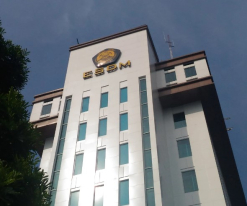



Despite growing opposition from some community members, the Ministry of Energy and Mineral Resources (ESDM) has reported that the majority of residents in Flores, East Nusa Tenggara are in favor of developing geothermal power plants (PLTP) in their region.
Director of New and Renewable Energy and Energy Conservation (EBTKE) at the ESDM Ministry, Eniya Listiani Dewi, said recent data indicates that only about 10 percent of the local population is against the project.
"It turns out it's not the majority who oppose it. I'm saying that only 10 percent reject geothermal development," Eniya said on Wednesday, April 30, 2025.
However, she noted that while 90 percent of residents support the project, they have remained passive. In contrast, the minority who oppose the project have been much more vocal and visible in their resistance.
To address the situation, the central government, in coordination with the Governor of East Nusa Tenggara, has gathered mayors and regents from regions with geothermal potential. The government also involved non-governmental organizations (NGOs) and academics to gather a wide range of perspectives.
"Some regents are somewhat supportive, others not so much. They say, 'This is what my people are asking for.' So we’re listening to all sides − from the social side, NGOs, and even experts from UGM (Gadjah Mada University)," she said.
Despite the ministry's assurances, environmental groups like the Indonesian Environmental Forum (Walhi) report that many locals reject the proposed expansion of the Ulumbu geothermal project into the Poco Leok area. Concerns include loss of land and living space, as well as damage to key water sources that provide clean drinking water.
The opposition intensified following past incidents, such as a deadly hydrogen sulfide (H₂S) gas leak in Sorik Marapi, North Sumatra, which resulted in five deaths and left over 275 people poisoned.
Similar geothermal operations in Mataloko, near Poco Leok, caused hot mud eruptions that flooded rice fields, contaminated water sources, and damaged agricultural land. The mud also corroded the metal roofing of homes, adding financial strain on residents.
Critics further warn that expanding geothermal operations in Poco Leok − located in the volatile Ring of Fire − could increase the risk of earthquakes, raising serious safety concerns.
Despite these objections, the government and state electricity company PLN have not indicated any plans to halt the expansion of the Ulumbu project.
Already have an account? Sign In
-
Start reading
Freemium
-
Monthly Subscription
20% OFF$29.75
$37.19/MonthCancel anytime
This offer is open to all new subscribers!
Subscribe now -
Yearly Subscription
33% OFF$228.13
$340.5/YearCancel anytime
This offer is open to all new subscribers!
Subscribe now
Set up email notifications for these topics