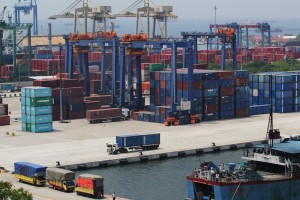



United States President Donald J. Trump has continued shaking up the world of international trade with an aggressive new import tariff policy, including Indonesia which is subject to tariff increases by up to 32 percent for a number of major export products.
An International trade expert says that Indonesia is being targeted because it is considered to be collaborating more closely with China, which is the U.S.'s main trade rival.
"This policy is not a surprise. Since the campaign, Trump has promised to punish countries that are considered to be worsening the U.S. trade deficit. Now that promise has been kept," Ariawan Gunadi, an expert in International Business and Trade Law at Tarumanegara University, said in a statement as quoted on Monday, April 7, 2025.
This protectionist move is not the first such measure that Trump has taken. In 2018, a similar policy sparked a trade war between the U.S. and China, causing turmoil in the global supply chain. Now, the policy has been expanded to a larger scope, targeting several Asian countries including Vietnam (46 percent), Cambodia (49 percent), China (34 percent), and Taiwan (32 percent).
Ariawan assessed that the tariff increase would have a serious impact on the competitiveness of Indonesian products in the U.S. market, especially strategic sectors such as manufacturing, textiles, electronics, and automotive.
"Our products will experience a significant price increase in the U.S. market. As a result, demand could fall, and our market share could be eroded," he cited.
Not only does it have an impact on exports, this policy also has the potential to hinder the flow of foreign investment (FDI) to Indonesia. The U.S. has been one of the main investors, especially in the industrial and technology sectors.
In response, Ariawan encouraged the government to immediately take tactical measures. Market diversification is the main strategy that must be implemented immediately.
"The European, Middle Eastern, African, and Latin American markets must be pursued. FTAs (free trade agreements) must also be optimized so that Indonesian products have wider access," he said.
In addition to diversification, he also emphasized the importance of a flexible economic diplomacy strategy. According to him, Indonesia must be able to maintain geopolitical balance amidst the heating up of U.S.-China relations.
In dealing with the impact of these high tariffs, Ariawan also emphasized the importance of using international trade law instruments. Safeguard measures, countervailing duties (CVD), and anti-subsidy measures are considered necessary to be activated to protect domestic industries from import pressures and unfair trade practices.
"These steps can provide temporary protection for affected national industries. The government must be alert and not hesitate to act," he added.
Finally, he reminded that trade diplomacy must be strengthened, both bilaterally and multilaterally, to reduce the negative impacts of this protectionist policy.
"There is no time to be passive. If we don't move quickly, our economy could become even more vulnerable," he concluded.
Already have an account? Sign In
-
Start reading
Freemium
-
Monthly Subscription
20% OFF$29.75
$37.19/MonthCancel anytime
This offer is open to all new subscribers!
Subscribe now -
Yearly Subscription
33% OFF$228.13
$340.5/YearCancel anytime
This offer is open to all new subscribers!
Subscribe now
Set up email notifications for these topics